Thursday, November 30, 2006

Dust-catching DVDs

Best Buy, Circuit City, Target, Wal-Mart -- all of them prominently feature DVDs in their consumer electronics fliers. So now the time has come to tie together our threads on collecting and shopping together.

How many DVDs do you really need to own? Personal question, true, but one not everyone asks. Some of my friends want to own every movie they see. Even after several years, they're still in the accumulation phase of collecting. Sure, they've got hundreds of movies, but how many get viewed more than once or twice?

These are collections that are stuck in the accumulation phase, with a list of titles that's wide but shallow. Do you really need to own Steve Martin's "Pink Panther" or Jim Carrey's "Fun with Dick and Jane?" Sure, they're both on sale now at Target but, really, how many times to you expect to revisit these gems?

While there are some DVDs I consider important to own, it’s a fairly small list. For a title to enter my collection, it has to be something I know I'll want to view in whole or in parts at least ten times or more. It should also be something that's not readily available. For everything else, there's Netflix.

And that's where collecting and gift buying come together. Unless you know your intended gift recipient is really burning for a copy of "Geisha," (another title on sale in said Target flier), a gift subscription to Netflix might be a better choice. As we move more towards Web 2.0 (more on that another post), the tradeoff between owning something of marginal interest and being able to access it when needed will continue to grow in importance when considering a purchase.

I'm glad I own the Kino release of "Metropolis." I've revisit it with some frequency, and I continue to find new insights with each viewing. "Pirates of the Caribbean?"

I can wait three days for the Netflix envelope to arrive.
- Ralph

Sunday, November 26, 2006

The informed shopper and Black Friday

So how did you do the day after Thanksgiving? Many people were there when the doors opened at 5:00 AM, and many departed with some kind of consumer electronics. In fact, the CE category was the big winner this year.

Reading anecdotal stories from various newspapers across the country, it seems few people thought out their purchases (beyond price). The most common purchases seemed to be flat-panel TVs, DVD players, MP3 players and game consoles -- all basically stand-alone items.

In the Bloomberg story I've linked to above, one shopper reports that "[she] bought a 42- inch Panasonic plasma TV for $1,000 at a Best Buy Co. store the day after Thanksgiving. The set was marked down from $1,700 and was "my gift to me."

I wonder if any research went into that purchase. If not, there may be some unpleasant surprises in store. Expect to mount it on a wall? The wall mount is a separate purchase -- expect to spend around $100 or so. Gonna just put it on your current A/V stand? Hope it isn't particle board -- that TV weighs about 69 lbs.

And if you're going to mount it on the wall, its best to get someone who knows what they're doing. If the mount isn't anchored to studs that set's going to take a spectacular nose-dive to the floor.

How about the rest of her gear? GIGO (Garbage In, Garbage Out) applies to video as well. If she's only getting standard analog broadcasts (or the equivelant from cable or satellite), then its gonna have the same poor resolution -- only it will be easier to see how bad it really is. While the set does have a built-in tuner for over the air digital broadcasts, without the proper reciever and connections, her cable service or satellite TV digital signal will be downcoverted -- and look like her plain old analog broadcasts.

It could be that she was prepared for all that, and everything's fine. But my rule of thumb is this: if it costs more than $20.00, its too expensive to qualify as an impulse purchase.

- Ralph

Friday, November 24, 2006

Ebay and the erosion of passion

Ken brings up a valid point about collecting and the impact of Ebay. In any collection, the value of an object is determined by three factors; desirability, availability and condition. Items formerly difficult to find are now only a click away on Ebay – which subsequently lowers their value.

And another aspect of collecting disappears -– the thrill of the hunt. It’s not something to be underestimated. While hoarding is a compulsion, collecting is a passion. The search is sometimes the most rewarding part –- and the experience can lead to a greater knowledge and appreciation of the field.

When everything becomes instantly available, objects not only loses some monetary value, but some of emotional value as well. Most collectors have stories about prized objects in their collection; how it took six years to finish the matched set, or how they stumbled across this great find in a flea market. The difficulty (or serendipity) of its acquisition can give the object added emotional value to the collector.

With enough money, you could probably acquire an instant collection of just about anything through Ebay. But would you care?

- Ralph

Wednesday, November 22, 2006

Collecting in the electronic age


Nice post on the difference between collecting and hoarding, Ralph.

One thing about collecting that struck me recently is how much the on-line auction has changed collecting. As a teenager, I collected beer cans. This involved a lot of leg work -- scouring flea markets, searching back roads, buying cans from different regions when on vacation, etc.

30 years later, when I decided to unload the cans on eBay, the market was swamped. Cans that had been hard to find were now easily available -- all you need is a PayPal account, and money was the only limiting factor. And, as a corollary, cans that had once had some value were selling for pennies on the dollar. The grunt work was gone.

Sure, there are still gems to be found in collecting the old-fashioned way, and there'll always be people doing that. But collecting can be almost a whim now. Decide that you want a collection of vintage movie posters and you'll probably start your search on-line. In fact you may never have to go any further.

A labor of love becomes a business transaction. Instant communication and an interconnected universal marketplace has brought us much, but something else has been lost.

Ken

The Concept of Collecting

I'd like to dig a little deeper into the concept of "collecting," especially as it's sometimes indistinguishable from hoarding. IMHO, true collections go through three stages: accumulation, consolidation, and definition.

1) Accumulation
-- This is when a collection is born. The collector actively seeks out more items to fill the collection. Whether the collector can articulate it or not, the goal is simply to get more. Let's take a stamp collection, for example. This would be the stage where any and all stamps are welcome -- new, old, foreign, domestic.

2) Consolidation
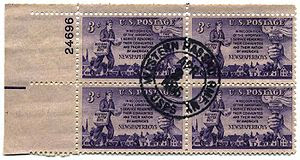
-- At some point, the collection begins to take shape. The collector, who now has a greater knowledge of his or her field of interest, finds some aspects of the collection more interesting than others. At the same time he realizes that it's impossible to collect every object in the field. The collector becomes more discerning with his purchases, and may even begin discarding peripheral pieces. Our stamp collector finds he likes US commemoratives, and sells or trades his foreign stamps to further his acquisition of American stamps.

3) Definition
-- As consolidation continues, the collector further narrows the theme of his collection. This kind of focused collection can usually be summed up in single, detailed sentence. Our philatelist might define his collection as US commemoratives issued between 1960 and 1977, mint condition only." The goal has changed from accumulating one of everything to obtaining the best possible examples of the collection's focus. While the collector may keep some items that are outside of the core collection -- a rare foreign stamp, or his first plate block -- most fall within the narrow confines of the collection.

Hoarding may seem indistinguishable from accumulation as I've defined it. Both involve gathering more and more things. Hoarding is usually a physical manifestation of unresolved emotional issues; building a nest of objects where one can feel safe. The accumulation phase of collecting is similar -- one object gives me pleasure, so ten should give me ten times as much. And most people don't move on from phase one, like the lady at the office who collects pigs -- ceramic, stuffed, large, small, realistic, whimsical or anything -- and has for years. That's the kind of collecting that can quickly turn to hoarding.

Notice, though, that as a collection moves through its life cycle it may actually shrink in size. The definition phase is a good time to dump items of marginal quality, duplicates and so on. And collectors in the definition phase may go months or even years without adding a new item (as opposed to those in the acquisition phase that can be adding stuff daily).

Healthy collecting can be a good thing. The accumulation of stuff just to have more – whether old newspapers or big-ticket electronics -- is not. And it could land you a place later on in the fourth circle of hell.

- Ralph